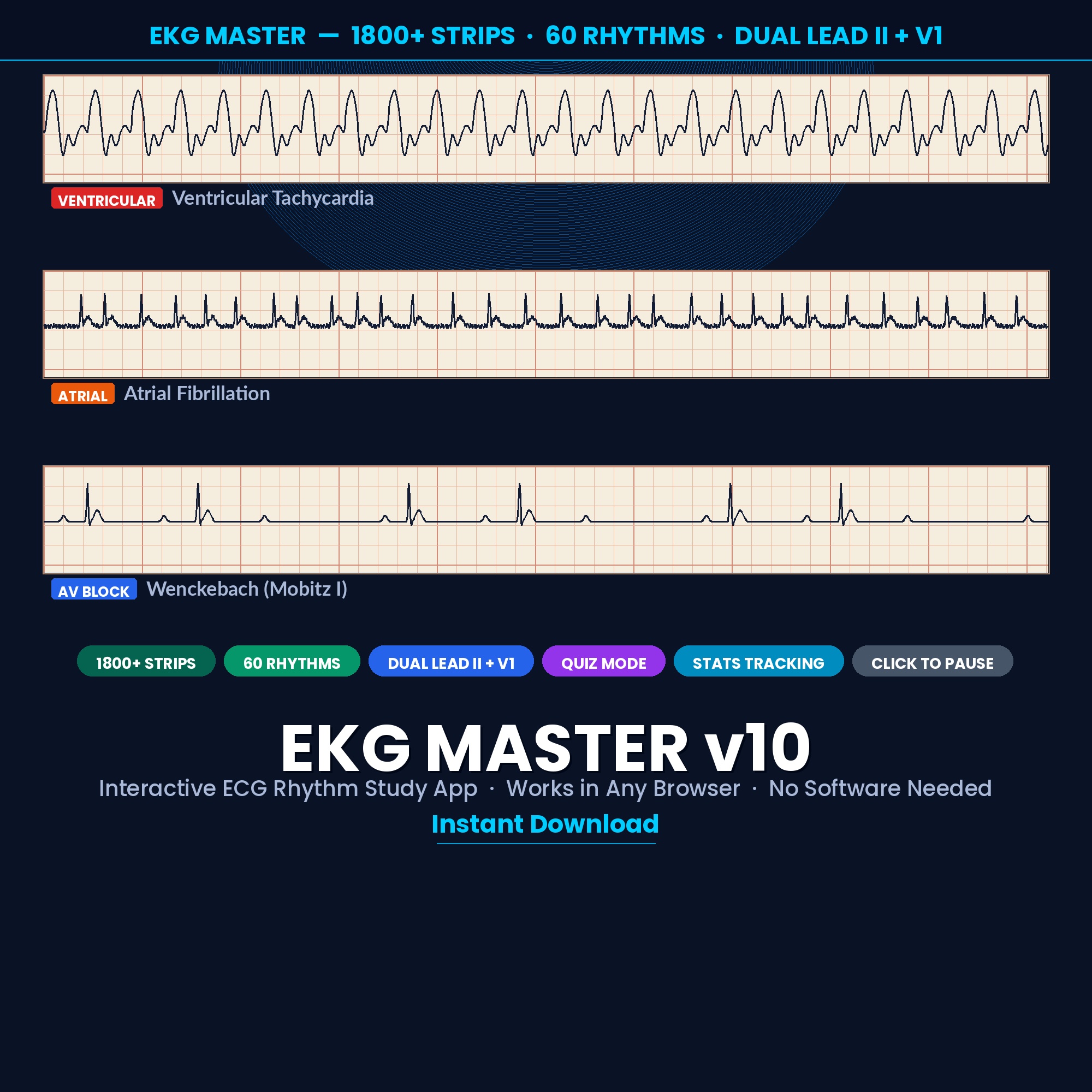
EKG Master v10.2
1,500 animated Lead II and V1 waveforms, 750 matched dual-lead cases, 62 rhythm labels, three difficulty levels, and four-choice quizzes.
Train your eyes with animated Lead II and V1 strips, repeatable quizzes, and enough variation to learn the rhythm instead of memorizing one picture.
Start with full rhythm-strip repetition, use the visual guide to connect criteria to morphology, then switch to flashcards for fast recall.
1,500 animated Lead II and V1 waveforms, 750 matched dual-lead cases, 62 rhythm labels, three difficulty levels, and four-choice quizzes.
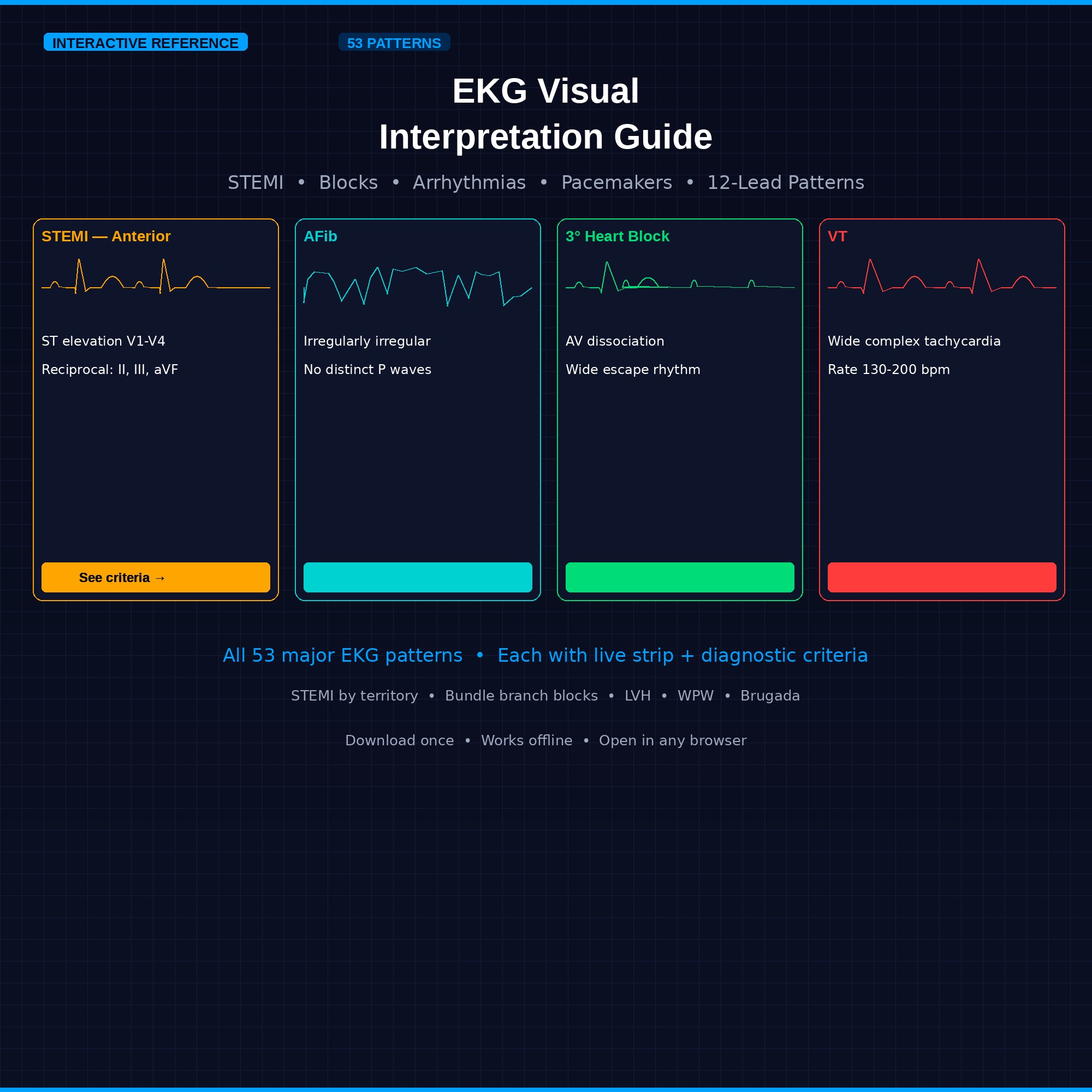
Connect rhythm, block, and STEMI recognition clues to animated waveform examples before testing yourself.
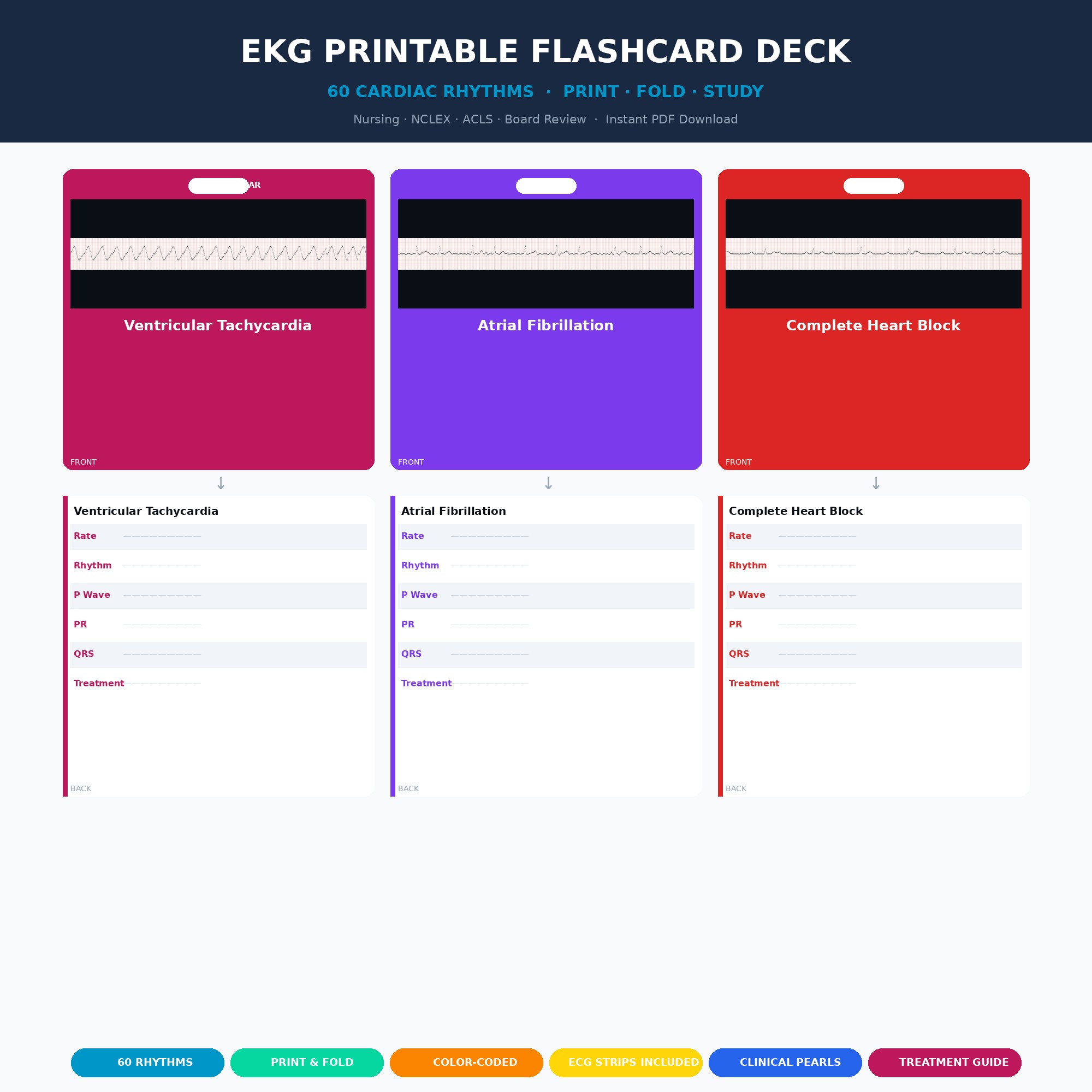
Use focused digital flashcards for quick recognition drills and short review sessions.
A single textbook image can make a rhythm feel like a fixed shape. Real monitor tracings vary with rate, conduction, noise, and the lead being viewed. Animated practice helps you follow timing relationships across successive beats instead of relying on one frozen example.
Dual-lead practice is especially useful when a pattern is subtle in Lead II but clearer in V1. It also reinforces a core habit: use all the information available before committing to an interpretation.
EKG Master v10.2 includes 1,500 animated Lead II and V1 waveforms across 750 matched dual-lead cases and 62 rhythm labels.
The downloaded desktop file works offline after it is saved and extracted. Mobile access uses the included hosted link and Add to Home Screen instructions.
Nurses, telemetry and monitor technicians, paramedics, students, and other learners who need repeated rhythm-recognition practice.