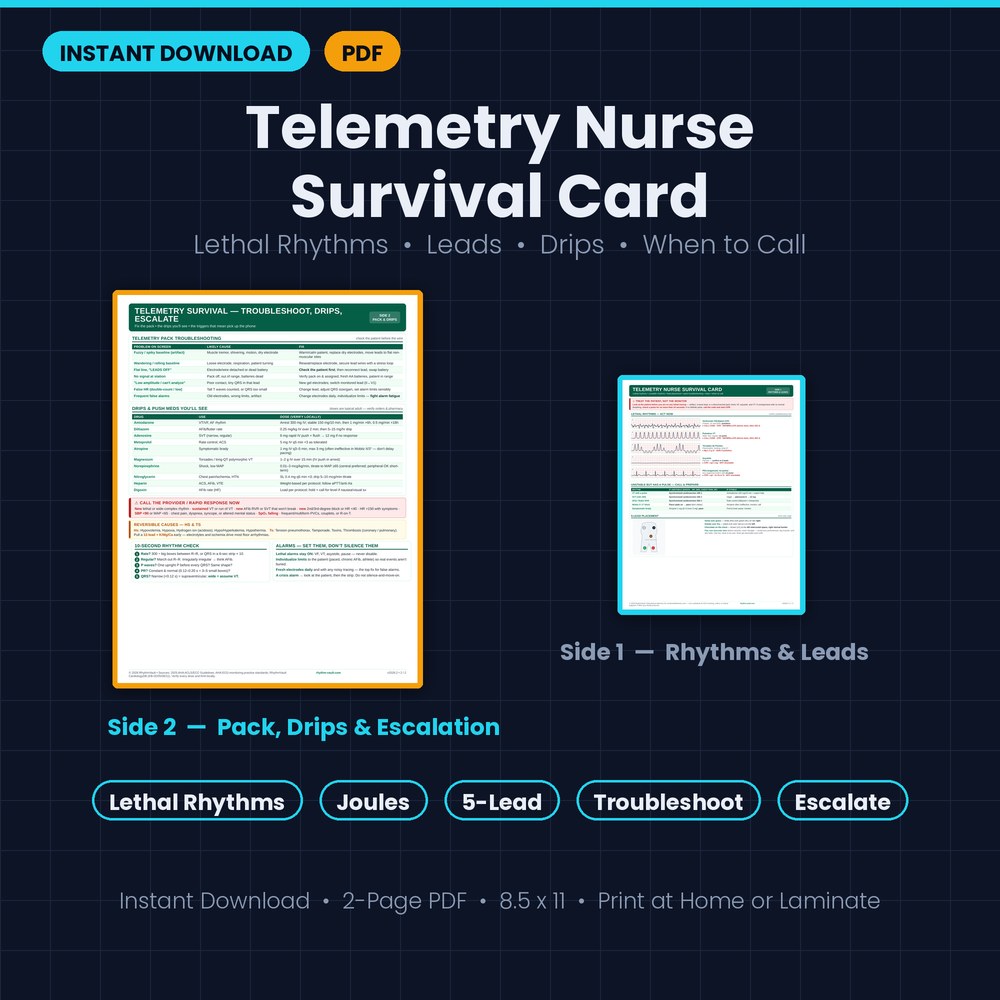
Telemetry Nurse Survival Card
Lethal rhythms, action prompts, device-guided cardioversion preparation, five-lead placement, and common pack troubleshooting.
Review lethal rhythms, lead placement, escalation triggers, cardiac drips, electrolyte changes, and the measurements that support confident telemetry interpretation.
Use the Survival Card for fast shift-oriented review, the Complete Guide for a broader telemetry foundation, or EKG Master for repeated rhythm-strip practice.
Lethal rhythms, action prompts, device-guided cardioversion preparation, five-lead placement, and common pack troubleshooting.
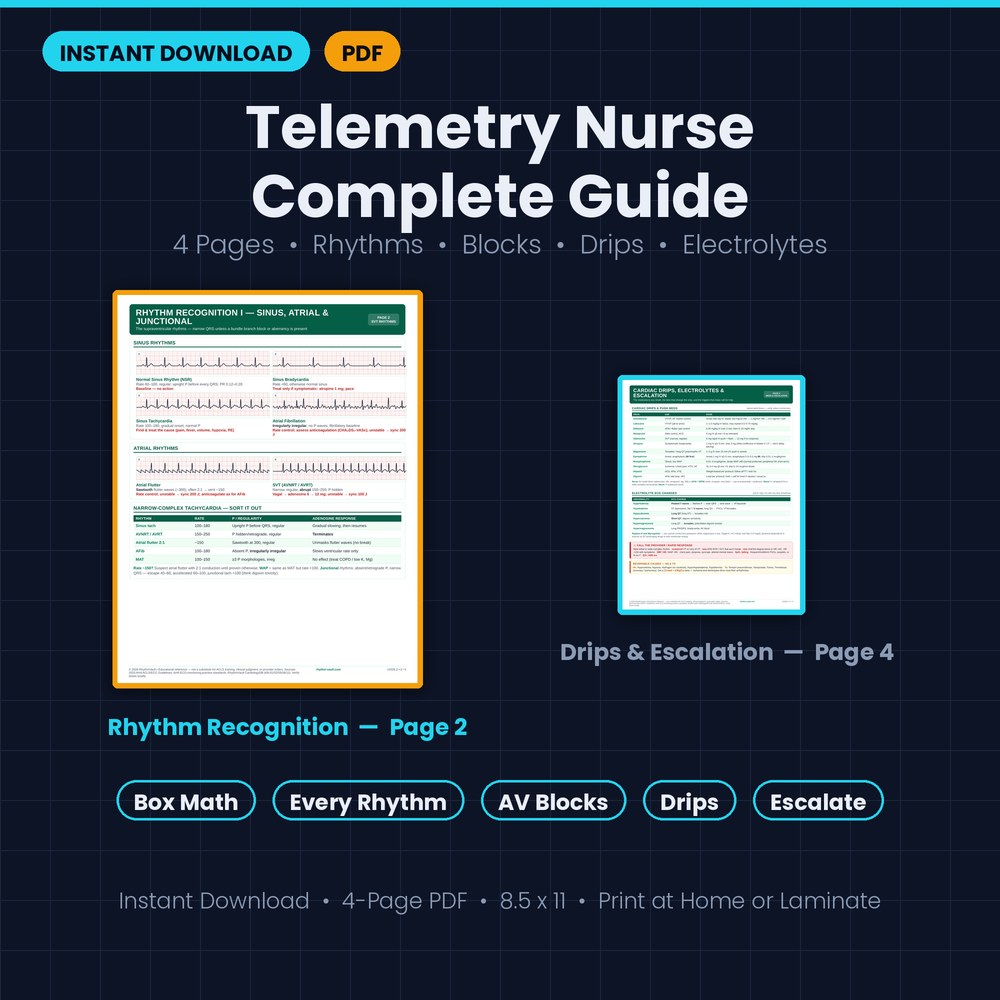
Box math, intervals, monitored rhythms, drips, electrolyte ECG changes, and escalation triggers across four pages.
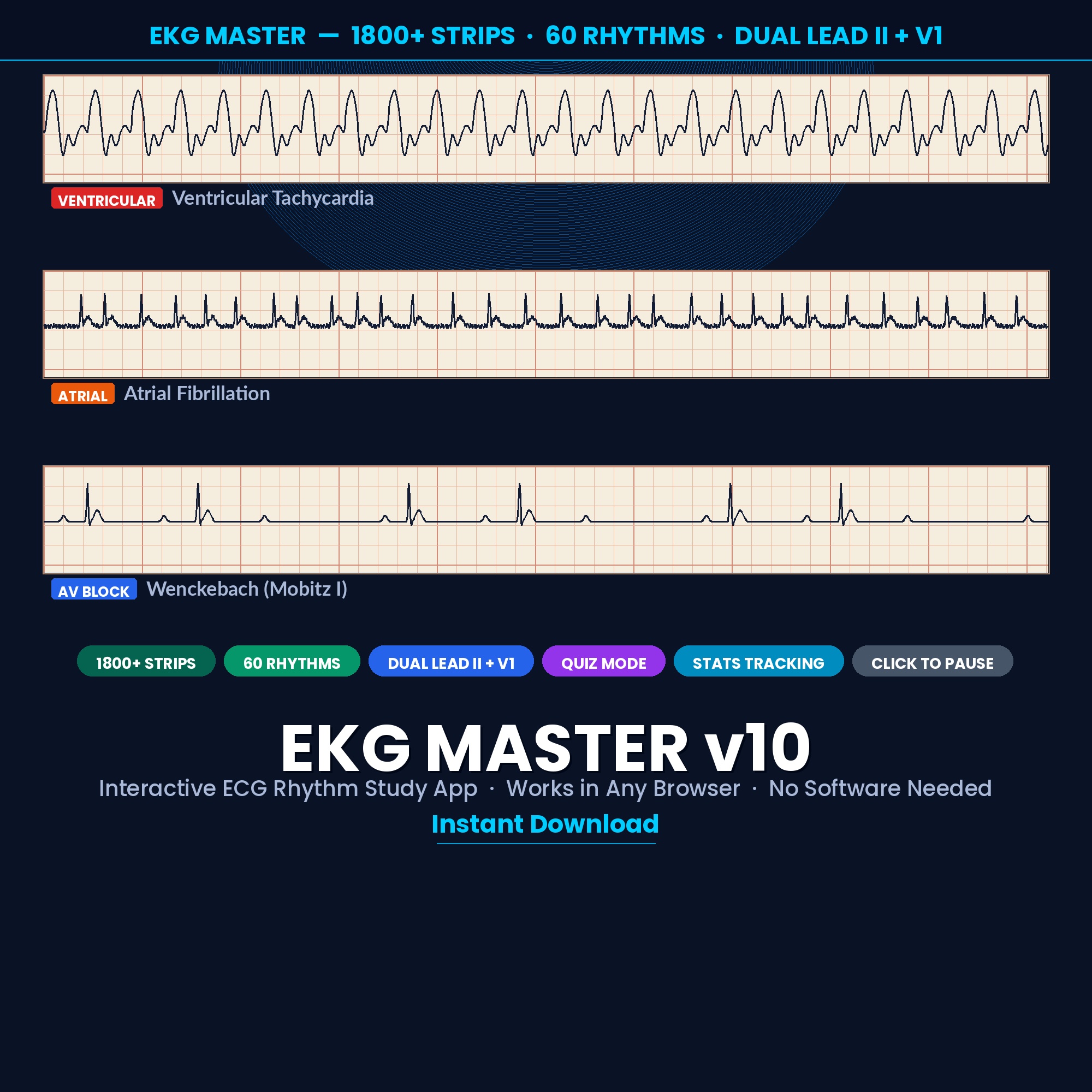
Practice 62 rhythm labels with 1,500 animated Lead II and V1 waveforms when you need repetition beyond a static reference.
Telemetry work combines rhythm analysis with reliable communication. A useful study plan goes beyond naming a strip: it includes lead placement, artifact recognition, interval changes, ectopy, pauses, conduction changes, and the ability to describe what changed.
Practice giving a concise rhythm report: rate, regularity, rhythm name, important intervals, what changed, when it changed, and whether the patient has symptoms. Follow your institution's chain of communication and escalation policy.